The Windowpane and the Changing Craft of Glass
Clear window glass changed how a room meets the outdoors. Learn how pane-making, frames and glass choices shape daylight, privacy and the view.
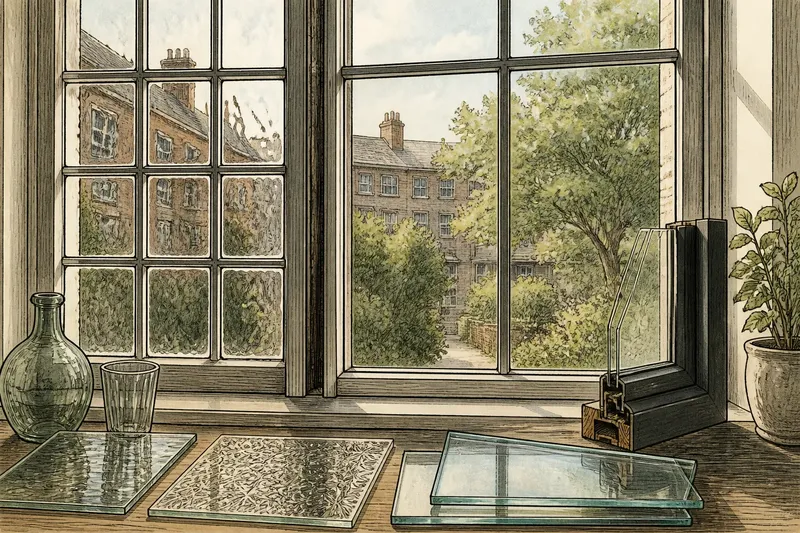
The common mistake is to think of a window as a hole with glass added at the end. Clear window glass changed the view itself: small, uneven panes gave way to broader surfaces that brought more daylight and a less interrupted outlook into a room.
From aperture to pane
Before glass could span a broad frame, a window was chiefly an opening in a wall. It admitted daylight and air, but left weather, noise and unwanted attention close at hand. Shutters, cloth or other coverings could soften the opening; they could not provide a continuous, clear view outdoors.
Early panes were small and often uneven, tinted or clouded. Their surfaces scattered light and bent the outlines of what lay beyond. A window was commonly assembled from many pieces, with the framing dividing the view into bright fragments.
Clear glass in usable sheets, together with frames that could support them, changed the scale designers could consider. Windows did not grow simply because people wanted a better view; the material and the skill to work it made broader openings possible.
How clear window glass changed
Glass begins with a melt made from silica-rich material and other ingredients that help it form and work. The craft is to make the melt clear, then shape it without leaving so much distortion that a view becomes difficult to read. Raw materials, heat and handling all affect a pane’s colour and clarity.
Older methods constrained the shape and regularity of each sheet. Crown glass was spun into a round disc, and panes cut from it could show ripples and changes in thickness. Another method blew glass into a cylinder, which was opened and flattened. Each process left its own surface character, and neither made large, uniformly flat panes straightforward.
Later methods shifted the balance between size and regularity. Drawing glass into a continuous ribbon, and later floating molten glass over a bath of liquid metal, made larger, flatter sheets possible. The result offered a more continuous view, though the qualities of a finished pane still depend on how it is made and treated.
Read the frame
Glass cannot hold itself in a wall. A frame supports the pane and accommodates the building around it. As panes grew, windows could use fewer divisions, letting the view run across a wider opening. Timber mullions, metal frames and later slender profiles each support glass in different ways and leave a distinct mark on the view.
The frame remains part of what a window shows. Thick divisions break the outdoors into separate fields; narrow ones interrupt it less. A broad pane can make a room feel more connected to a garden, street or courtyard, but it also exposes more glass to glare, heat transfer, noise and impact. A larger view is not automatically a more comfortable one.
Consider the whole assembly: the glass, its edges, the sash or frame, and the wall around it. A small opening with a clear view may suit a shaded room better than a large, bright expanse. The history of window glass is not a march towards maximum size, but an expansion of design choices.
Choose a kind of view
Clear float glass is familiar in contemporary windows because it gives a relatively even view. Other choices change what passes through or how the outdoors appears. Patterned or textured glass diffuses the view while admitting light; tinted glass changes the tone of daylight; laminated glass holds together differently if damaged. Low-emissivity coatings are designed to affect heat transfer and may subtly alter reflections or colour.
These options are not interchangeable. In a bathroom, privacy may matter more than a sharply defined view. In a living room facing a busy road, clear glass can preserve the outlook while the frame, glazing build-up and window position influence comfort. In a conservation setting, existing glass may have a visual character that a uniform replacement would lose.
Say you have a narrow kitchen window facing a neighbour’s fence and want more daylight without feeling exposed. You compare clear glass with a softly patterned pane in the lower part of the window, leaving the upper part clear. The expected result is daylight across the worktop, with less direct detail visible at eye level. The trade-off is a softened view below and a clearer one above; whether it suits the room depends on its orientation and privacy needs.
Questions about window glass?
Why do old panes look wavy?
Older glassmaking methods could leave changes in thickness and surface, making straight lines outdoors appear to ripple through the pane. That waviness can reflect how the glass was formed rather than indicate damage.
Does thicker glass always improve a window?
Thickness alone does not determine a window’s comfort, clarity or suitability. The glass type, complete glazing unit, frame and location all matter.
Can old window glass be reused?
Sometimes, if a pane can be removed intact and its size and condition suit another opening. Old glass may be fragile or irregular, so ask a glazier to assess it rather than assuming it can be cut or fitted like a new sheet.
Why do modern panes show reflections?
Clear glass reflects some light, and reflections are more noticeable when the outdoors is darker than the room. Coatings and multiple panes can change their appearance, so compare samples in lighting similar to the window’s setting.
Choices for a room
When considering a new window or replacement glazing, start with the view you want and the conditions around it. Look at the opening from indoors and outdoors, notice when direct sun reaches it, and decide whether privacy, ventilation or a framed outlook matters most. Then compare glass types and frame proportions as parts of one design decision.
- Check whether the view is worth preserving; if it is, compare clear glass, and if privacy matters more, consider patterned glass or another treatment.
- Check when direct sun reaches the opening; if glare is a problem, ask about suitable glass and shading, and if the room needs that daylight, avoid choosing tint by appearance alone.
- Check what can be seen at eye level from outside; if the room feels exposed, consider obscuring the lower pane, and if the outlook matters there, compare screening or planting instead.
- Check whether the frame divides the view heavily; if it does, ask whether a different frame design suits the opening, and if the divisions are part of the building’s character, retain them where appropriate.
- Check the condition and character of existing panes; if they are intact and significant, ask a glazier about retention or reuse, and if they are damaged or unsuitable, discuss a compatible replacement.
- Check whether the choice has safety or building implications; if it does, consult a qualified glazing professional and check local rules, and if it does not, compare samples in the room’s actual light before deciding.
What is not worth the effort is pursuing flawless transparency as if every ripple or reflection were a defect. A pane that suits a room’s light and outlook can be more pleasing than one that merely seems invisible. Clear window glass widened the possibilities for bringing the outdoors into an interior; the useful question is how much of that view belongs in this particular room.